
Neither method is universally better. A freeze dryer and a spray dryer solve different product and process problems. The right choice depends on the feed, the quality attributes that must be protected, the required final form, the intended batch or production workflow, and the evidence available from trials.
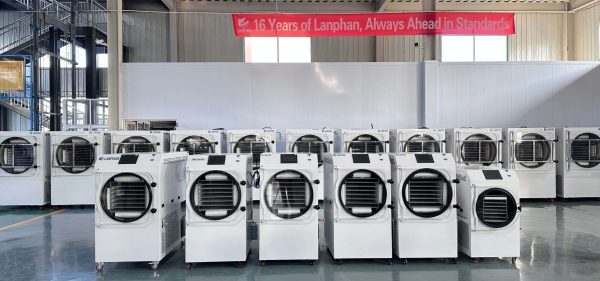
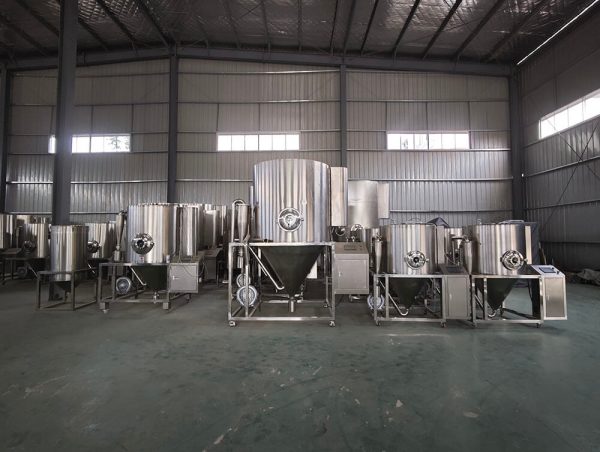
Freeze Dryer vs Spray Dryer: Quick Comparison
| Decision factor | Freeze dryer | Spray dryer |
|---|---|---|
| Starting material | A product that can be frozen in trays, vials or another suitable container | A liquid feed that can be pumped and atomized safely |
| Removal mechanism | Freezing followed by vacuum drying, including sublimation of frozen solvent | Droplet formation followed by rapid drying in a heated gas stream |
| Typical workflow | Batch process with loading, freezing, primary drying, secondary drying and unloading | Feed, atomization, drying and powder collection in a continuous-flow path during the run |
| Resulting form | A porous dried cake, pieces or bulk material that may require further handling | Powder collected directly from the drying and recovery system |
| Main development question | Can the product tolerate freezing and vacuum drying while meeting critical quality requirements? | Can the feed atomize, dry and collect within a stable process window? |
Choose Freeze Drying When Product Structure or Reconstitution Drives the Decision
Freeze drying is often evaluated when the material is sensitive to the thermal and liquid-to-droplet conditions of other drying methods, or when a porous structure and controlled reconstitution are important. The product is frozen first, so formulation behavior during freezing is part of the process—not a detail that can be ignored.
A freeze-drying study should consider freezing behavior, fill depth, product temperature, chamber pressure, condenser capacity and the endpoint for primary and secondary drying. A cycle that produces a dry-looking cake is not automatically acceptable; the final decision should be based on the quality attributes relevant to the product.
Choose Spray Drying When the Target Is Powder from a Pumpable Feed
Spray drying is relevant when a liquid feed must be converted directly into powder and can be delivered through the proposed atomization system. It gives the development team control over feed conditions, atomization, inlet and outlet conditions, airflow and powder recovery.
The method still has limits. Sticky materials may deposit on the chamber or recovery equipment. Suspended particles can affect nozzles and feed stability. Heat sensitivity cannot be assessed from inlet temperature alone because the product experiences a changing temperature and moisture history during droplet drying.
Do Not Select on “Low Temperature” or “Fast Drying” Alone
Freeze drying is commonly described as low-temperature drying and spray drying as rapid drying. Both statements are incomplete when used as purchase criteria. A freeze-drying cycle may expose the product to long processing times and formulation stresses during freezing. Spray-dried droplets may have short residence times, but the actual product response depends on feed composition, droplet size and drying conditions.
Ask which critical quality attribute is at risk and how it will be measured. That is more useful than choosing a technology from a single temperature or time comparison.
Compare the Final Product Requirements
Start with a written target product profile. For a freeze-dried product, relevant requirements may include cake appearance, residual moisture, reconstitution, stability or retained activity. For a spray-dried powder, the team may evaluate moisture, recovery, bulk density, flow, solubility, particle distribution or another application-specific property.
Not every test applies to every product, and neither process guarantees a result before representative trials. The equipment proposal should state which operating variables are controlled and which product tests remain the buyer’s responsibility.
Compare Throughput, Utilities and Total Process Cost
It is not accurate to assume that every spray dryer is cheaper or more energy-efficient than every freeze dryer. Equipment size, solvent load, exhaust treatment, refrigeration, vacuum, heating, cleaning, containment, recovery losses, labor and required cycle time all affect the economics.
Compare quotations using the same basis: feed composition, amount of solvent to remove, required product output, operating schedule, collection or unloading losses, utilities and cleaning expectations. A lower equipment price can be offset by poor recovery or an unsuitable product; a longer batch process may still be justified when it protects a critical product attribute.
Use Trials to Resolve Uncertainty Before Scale-Up
Representative laboratory work should precede a major equipment decision when feed behavior is uncertain. A freeze-drying study can help define a workable cycle direction. A lab spray-drying trial can show atomization, deposition and collection behavior. Neither test automatically proves full-scale performance.
Record the formulation, sample preparation, operating conditions, material balance and product test results. When moving to pilot or production scale, identify which variables must remain comparable and which need new development work.
Questions to Include in an RFQ
- What is the exact feed composition, solvent system and solids content?
- Which product quality attributes must be protected or created?
- What final form is required: cake, pieces, powder or another form?
- What batch size or production rate is needed, and on what operating schedule?
- What cleaning, containment and product-contact requirements apply?
- Are there flammable solvents, biological hazards or other safety constraints?
- What utilities and installation space are available?
- Which trial data are available, and which claims still require testing?
Frequently Asked Questions
Is freeze drying always better for heat-sensitive products?
No. It is often considered for sensitive materials, but suitability depends on freezing behavior, formulation, cycle conditions and the quality attributes that must be retained. A product-specific study is still required.
Is spray drying always the lower-cost option?
No. Total cost depends on equipment configuration, utilities, exhaust and solvent handling, recovery, cleaning, labor and throughput. Compare both processes on the same material and operating basis.
Can a freeze dryer make a ready-to-use powder?
It can produce a dry porous material, but the final form and any downstream milling or handling depend on the product and process. Spray drying is designed to collect powder directly from atomized liquid feed.
Can one product use both methods during development?
Yes. When the quality target is not yet fixed, comparative trials can clarify how each route affects the product. The decision should be based on measured results rather than a generic industry preference.
Choose the Process from the Product Backward
Use the Lanphan freeze dryer range and Lanphan spray dryer range as starting points for equipment discussion. For spray-drying fundamentals, review what a spray dryer is intended to do.
Before requesting a configuration, send the real feed information, required final form, quality targets, intended scale and known safety constraints. Lanphan can then discuss which drying route is reasonable and what still needs to be confirmed by testing.
 English
  Russian
  Arabic
  Spanish