
Choose a Vertical Autoclave by Loading Method, Chamber Shape, and Real Daily Handling
A vertical autoclave is not just a smaller sterilizer with a different shape. Buyers usually move toward this structure when top loading, cylindrical chamber depth, basket handling, and a smaller floor footprint fit the actual workflow better than a front-loading direction.
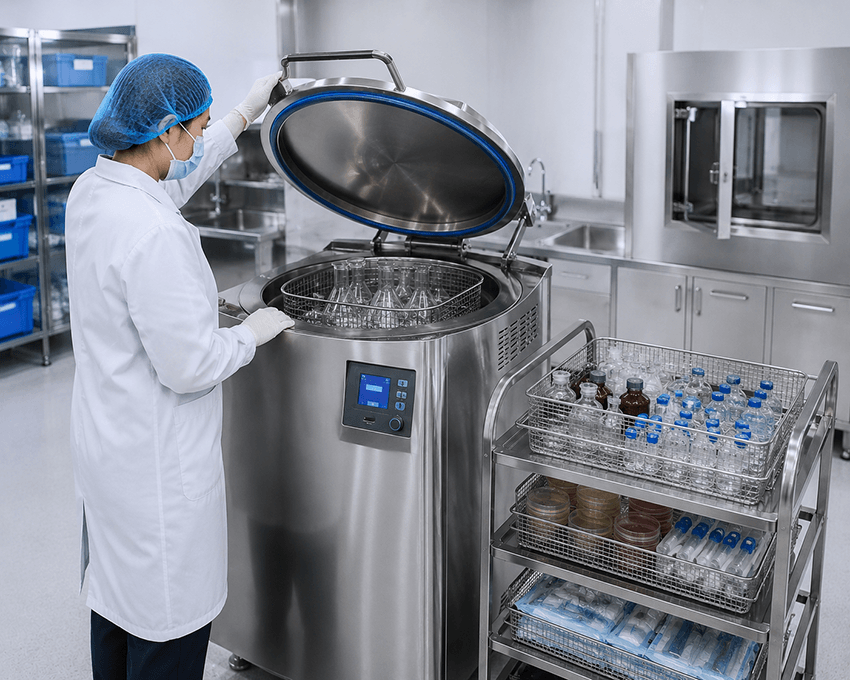
Why Buyers Move from Tabletop to Vertical
Buyers usually do not search for a vertical autoclave just because they want a different shape. They move in this direction when benchtop capacity feels too limited, when the room can accept a floor-standing unit, and when top-loading depth is a better fit for the real load.
This is why the decision should not start with liters alone. It should start with what you sterilize, how you load it, how often the chamber is used, and whether daily handling becomes easier or harder after the machine arrives.
More practical chamber depth
Vertical direction often makes more sense when taller containers, grouped baskets, or deeper load layouts fit better upright than inside a tabletop chamber.
Step-up in usable capacity
Many buyers compare vertical units when they need more real sterilization capacity but do not want to jump straight to a larger front-loading system.
Better match for basket workflows
Where loads are already grouped in baskets or deeper containers, top loading can feel more natural than tray-style benchtop handling.
Smaller floor footprint
Vertical autoclaves are often shortlisted when floor space is limited and the site wants a more compact floor-standing sterilizer direction.
Where Vertical Chamber Shape Usually Makes More Sense
Buyers often choose a vertical autoclave because the chamber orientation works better for the load itself. The real question is whether your items are easier to lower in, lift out, and arrange in a top-loading cylinder.
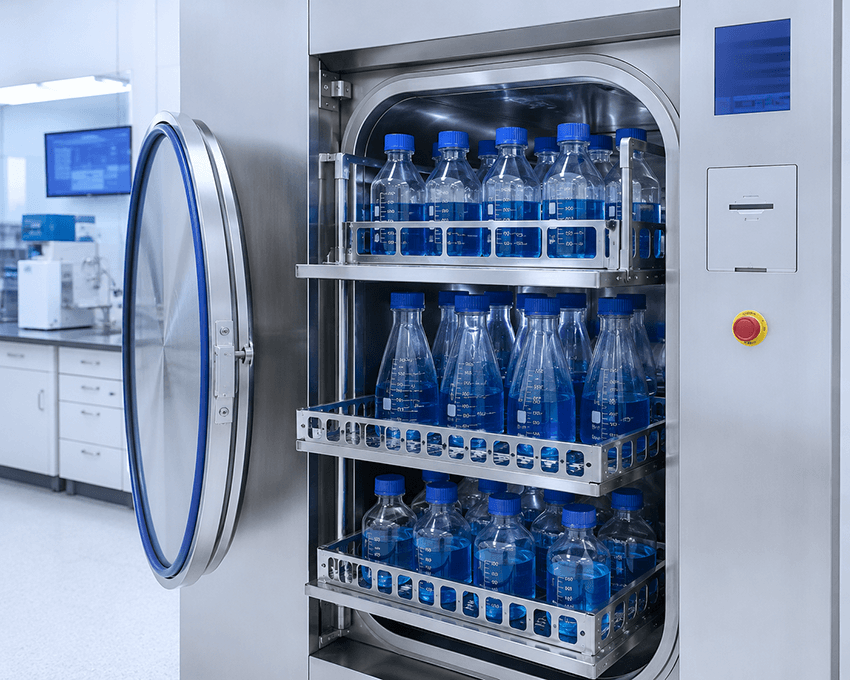
Liquids & Media
Vertical chambers are often compared for media preparation and liquid-related work where deeper upright loading supports the workflow.
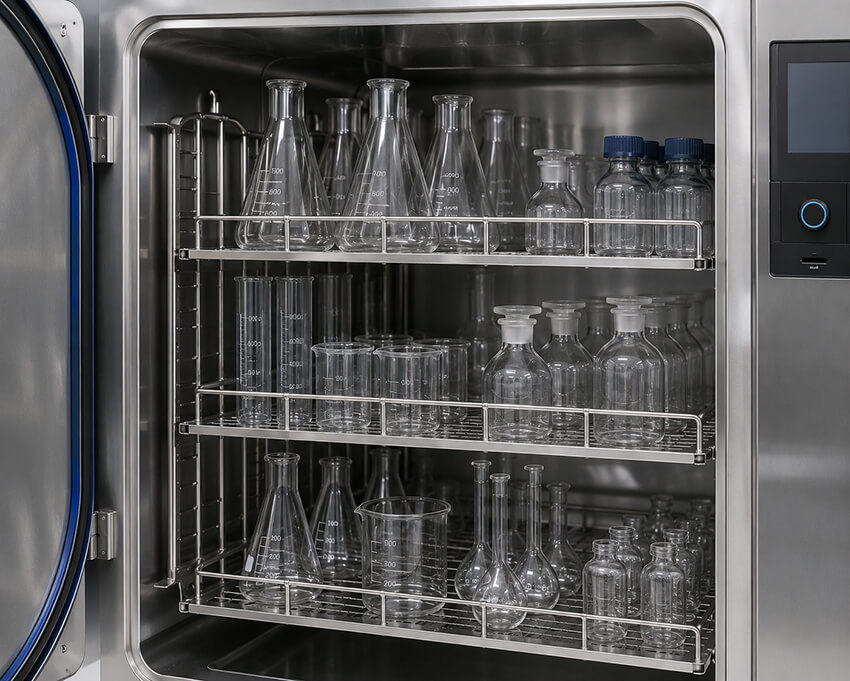
Glassware & Bottles
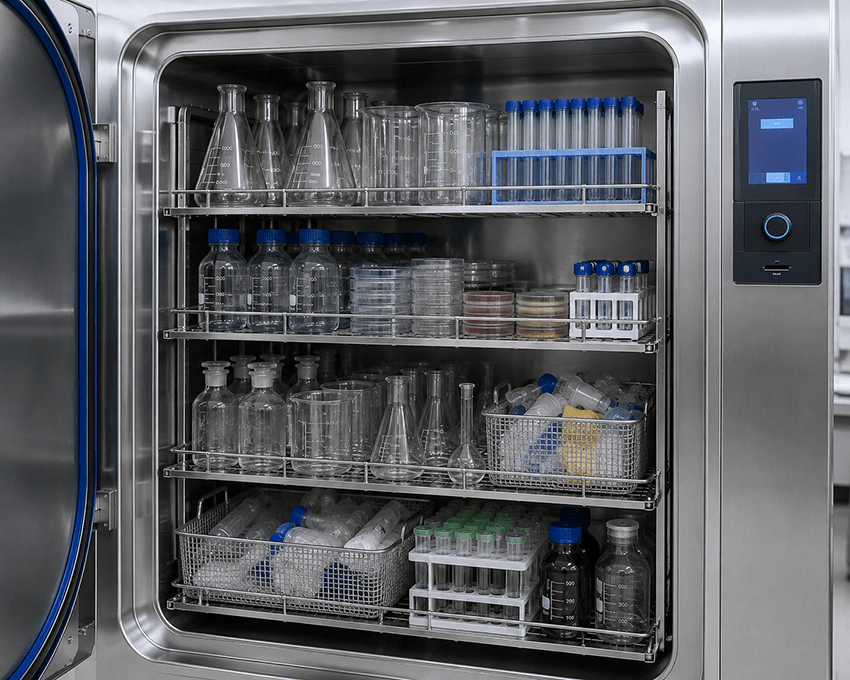
Where taller bottles, flasks, or grouped containers are part of the daily work, vertical chamber shape can be easier to use.
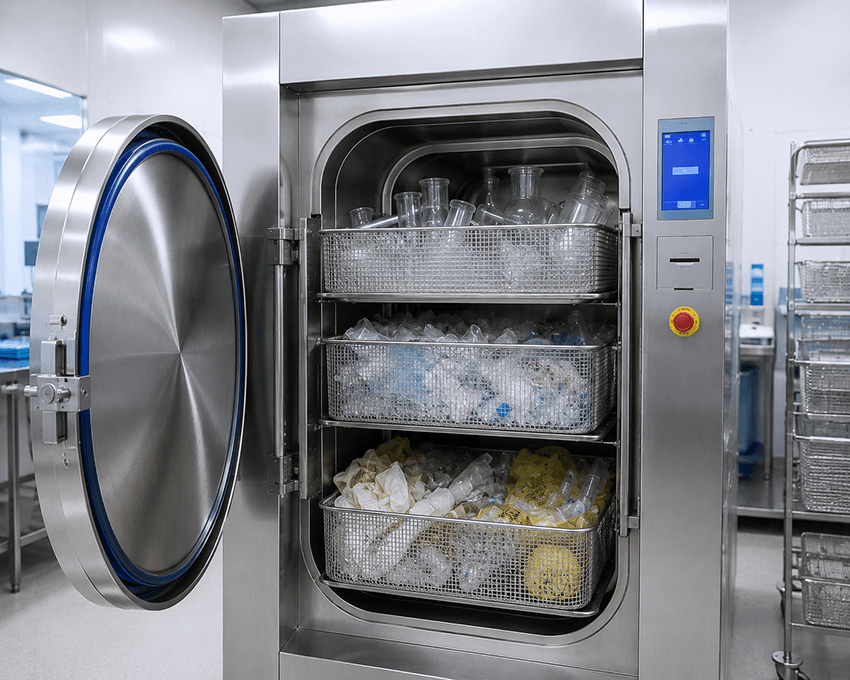
Waste & Basket Loads
Vertical loading is often more natural where basket handling is already part of the normal sterilization routine.
Mixed Daily Loads
Some buyers choose vertical direction because one chamber can support repeated mixed lab-style batches without taking too much floor space.

Basket Weight
A vertical autoclave may save floor space, but the basket still has to be lifted. Buyers should think about real load weight, not just chamber size.
Chamber Depth
Deeper loading can be useful, but it also changes how easy it is to reach, arrange, and unload the batch safely after the cycle ends.
Top Clearance
Buyers sometimes focus only on floor footprint and forget overhead working space. A vertical lid still needs practical clearance to open and operate safely.
Need Help Choosing the Right Vertical Autoclave?
Send your load type, basket style, chamber size range, and installation conditions first. We will help you narrow the right vertical autoclave direction before quotation.