Most buyers do not start by asking how an autoclave works. They start with a more practical question: where does it actually fit in real production or lab work?
That is the right place to begin. An autoclave is not a one-industry machine. It is used across laboratories, healthcare, pharmaceutical production, food processing, and a range of industrial applications where heat, pressure, and reliable sterilization all matter.
The challenge is that “autoclave application” means different things in different settings. In one plant, it may be used to sterilize packaged food. In another, it is used for glassware, media preparation, or waste decontamination. In some industries, it goes beyond sterilization entirely and becomes part of a controlled manufacturing process.
What Is an Autoclave?
An autoclave is a pressure vessel that uses steam, heat, and pressure to sterilize materials or process products under controlled conditions. In most cases, the goal is to destroy microorganisms and create a safer, cleaner, or more stable result.
That broad definition is exactly why autoclaves show up in so many industries. The machine itself may look similar from one application to another, but the process target can be very different depending on what is being loaded into the chamber.
Why Autoclave Applications Matter
It is easy to think of an autoclave as just another sterilizer. In practice, its role is often much more important than that.
In laboratories, it protects experiments from contamination. In healthcare, it supports infection control. In pharmaceutical production, it helps maintain sterile conditions and product safety. In food processing, it is part of shelf-life protection and commercial sterility. And in industrial settings, it can be used in manufacturing steps where pressure and heat are required for more than just sterilization.
That is why buyers should not only ask whether they need an autoclave. They should ask what kind of application they need it for, because that drives chamber size, loading method, control requirements, temperature range, cycle design, and sometimes even whether an autoclave is the right category at all.
How an Autoclave Works in Different Applications
The basic principle stays the same. The chamber is loaded, air is removed or displaced, steam and pressure are introduced, the load is held under controlled conditions, and then the cycle is completed with cooling or drying depending on the process.
What changes from one application to another is the load itself and the process goal. Sterilizing empty lab glassware is not the same as processing sealed food packages. Sterilizing medical instruments is not the same as handling pharmaceutical containers or biological waste. The machine may still be called an autoclave, but the process logic changes with the application.
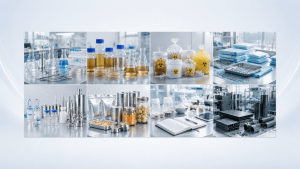
Main Applications of Autoclave
1. Laboratory Sterilization
One of the most common uses of an autoclave is in laboratories. It is widely used to sterilize glassware, instruments, tools, media, and other reusable lab materials before or after testing work.
This is one of the most practical applications because contamination control is not optional in lab work. A small issue in sterilization can affect sample integrity, microbial results, and the reliability of the whole process.
2. Culture Media Preparation and Research Work
Autoclaves are often used to prepare sterile culture media and laboratory solutions. In research environments, that makes them a routine part of microbiology, life science, and analytical workflows.
For many labs, this is not a secondary use. It is part of daily work. The autoclave is not just cleaning up after experiments. It is helping make those experiments possible in the first place.
3. Waste Decontamination
Another major lab and institutional use is decontaminating biological waste before disposal. That includes used media, contaminated instruments, and research waste that cannot leave the site untreated.
This application matters because it is tied directly to safety and compliance. In many facilities, waste handling is one of the non-negotiable reasons an autoclave is installed.
4. Medical and Healthcare Instrument Sterilization
In healthcare settings, autoclaves are used to sterilize surgical instruments, reusable devices, trays, and other items that must be free of microorganisms before use.
This is probably the application most people associate with autoclaves, and for good reason. In hospitals, clinics, and sterile service departments, steam sterilization remains one of the most established and trusted methods for reusable items that can tolerate the process conditions.
5. Pharmaceutical and Biotech Applications
In pharmaceutical and biotech environments, autoclaves are used to sterilize glassware, instruments, containers, components, and certain process materials. They also play an important role in supporting cleanroom workflows and controlled manufacturing environments.
This is where application details start to matter more. Some facilities need lab autoclaves for media and tools. Others need systems suited for production support, packaging components, or pass-through operations between clean and non-clean areas.
6. Food Processing and Packaged Product Sterilization
In the food industry, autoclaves are used to sterilize packaged foods and help extend shelf life by destroying spoilage organisms and harmful microorganisms. In many food-processing contexts, this type of equipment is also referred to as a retort, especially when it is used for sealed products such as cans, jars, trays, and pouches.
This application is very different from general lab sterilization. The focus is not just killing microorganisms on tools or containers. It is processing the final packaged product under controlled thermal conditions so the food can remain safe and stable during storage.
7. Pilot Testing and Product Development
Autoclaves are also used in pilot labs and development environments to simulate production conditions on a smaller scale. This is especially useful in food R&D, packaging trials, and process development work where the goal is to validate a cycle before moving to full production.
That makes the autoclave more than a support machine. In some development settings, it becomes part of the decision-making process for product launch and scale-up planning.
8. Industrial Manufacturing Applications
Outside traditional sterilization, industrial autoclaves are also used in manufacturing processes that rely on controlled heat and pressure. Depending on the industry, that can include composite material curing, glass lamination, rubber processing, and other specialized production steps.
This is a useful reminder that not every autoclave application is about sterilization alone. In some industrial sectors, the machine is part of product formation, material performance, or structural processing.
Who Uses Autoclaves?
Autoclaves are used by a wide range of organizations, including laboratories, hospitals, research institutes, pharmaceutical manufacturers, food producers, pilot plants, and industrial manufacturers.
The application usually falls into one of three broad categories: sterilizing tools and materials, decontaminating waste, or processing products under heat and pressure. Once you know which category your process belongs to, equipment selection becomes much clearer.
How to Choose the Right Autoclave for the Application
The right autoclave depends much more on the job than on the machine name. Buyers often focus on size first, but application fit matters more.
Start with the Load
Ask what will actually go inside the chamber. Instruments, glassware, biological waste, culture media, packaged food, and industrial materials all require different handling logic.
Define the Real Process Goal
Are you trying to sterilize reusable equipment, prepare sterile media, decontaminate waste, or process a packaged product for shelf stability? Those are very different goals, even if they all involve heat and pressure.
Check Whether the Process Is Batch Support or Production-Critical
Some autoclaves support the workflow. Others are directly tied to output, validation, and product release. That difference affects how much control, traceability, and repeatability the system should have.
Do Not Overlook Chamber Configuration
Vertical, horizontal, front-loading, pass-through, and food-process systems all make sense in the right context. The best configuration is the one that matches loading pattern, facility layout, and cycle requirements.
Think About Future Use, Not Just Current Need
A buyer who only looks at today’s load may end up replacing the system too early. If product development, throughput, or validation needs are likely to grow, that should be part of the decision from the start.
Common Mistakes
The first mistake is talking about autoclaves too generally. The term is broad, and that often leads buyers to compare machines that are meant for completely different jobs.
The second is assuming sterilization is the only application. In reality, autoclaves are used for waste treatment, process development, packaged food sterilization, and even manufacturing operations that go beyond sterilization.
The third is choosing based on chamber size alone. Size matters, but application fit matters more. A machine that looks big enough on paper can still be the wrong choice if the cycle logic, loading style, or control level does not match the process.
Frequently Asked Questions
What is the main application of an autoclave?
The main application of an autoclave is sterilization under heat and pressure, but the exact use depends on the industry. Common applications include laboratory sterilization, medical instrument sterilization, pharmaceutical use, food processing, and waste decontamination.
Are autoclaves only used in laboratories?
No. Laboratories are one of the most common settings, but autoclaves are also widely used in healthcare, biotech, pharmaceutical production, food processing, and industrial manufacturing.
Is a food retort also an autoclave?
In many food-processing discussions, a retort can be considered a type of autoclave used for packaged food sterilization. The terminology overlaps, but in food production the process target is usually more specific.
Can an autoclave be used for waste treatment?
Yes. Many laboratories and institutions use autoclaves to decontaminate biological waste before disposal.
How do I choose the right autoclave?
Start with the application. Look at what is being processed, what result is required, how the chamber will be loaded, and whether the autoclave is supporting the workflow or directly affecting production output.
Need Help Choosing the Right Autoclave for Your Application?
If you are comparing autoclave options for laboratory work, food processing, pharmaceutical use, or industrial applications, the best starting point is the process itself.
Talk to our team about your product, load type, chamber requirements, and production goals, and we can help you evaluate the right autoclave configuration for your application.
Talk to Our Team

 English
  Russian
  Arabic
  Spanish