
What are common freeze-drying mistakes?
I. Introduction
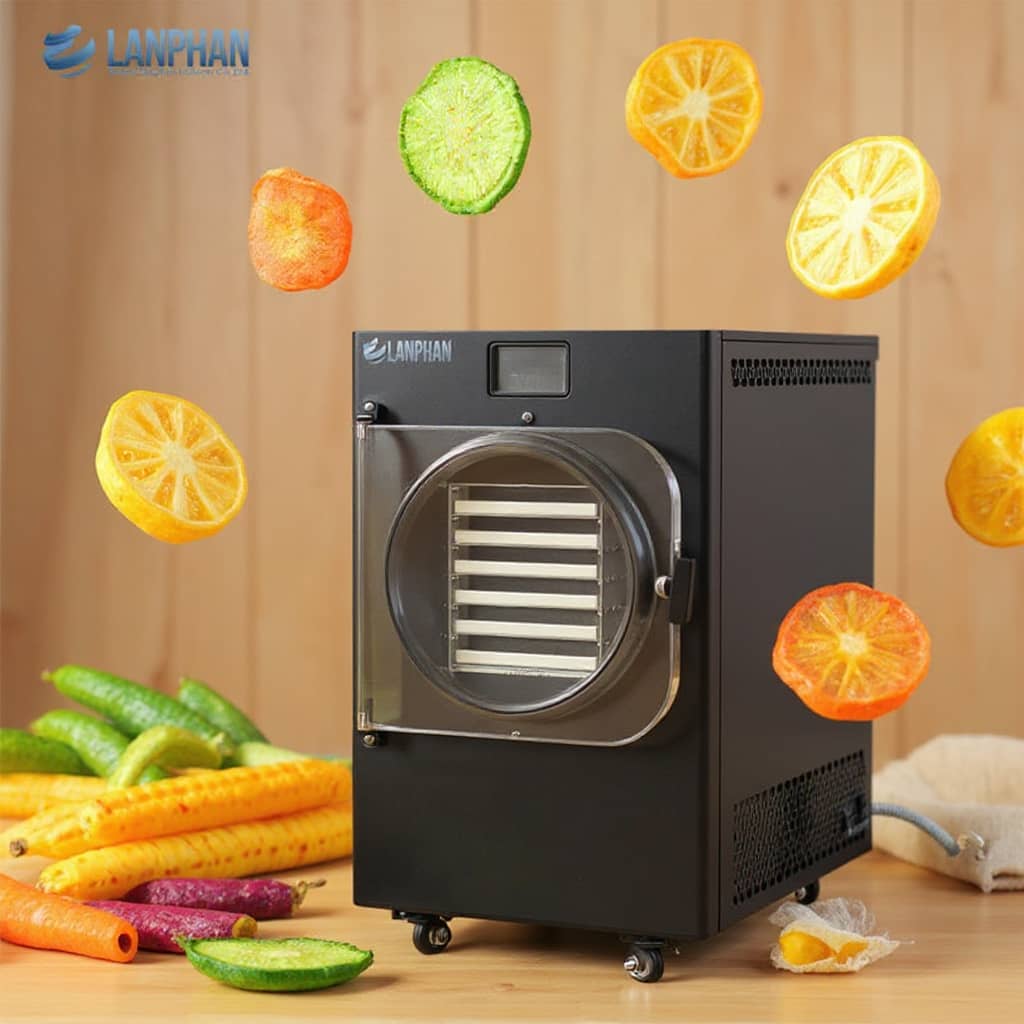
Freeze-drying, also known as freeze drying, is an advanced drying technology that removes moisture from materials by sublimation (ice directly turns into water vapor without passing through a liquid state) under low temperature and high vacuum conditions. Any errors during the freeze-drying process can lead to poor results or even the complete loss of the freeze-dried product. So, what are some common freeze-drying errors?
II. Before Freeze-Drying
The food was not cut or processed properly before preparation. Especially for cherry tomatoes, grapes, raisins, hawthorns, blueberries, etc., you need to cut them into pieces or poke a few holes in them with a toothpick.
Or the food is cut into pieces, but they are too large, exceeding two-thirds of the tray’s height, or they are placed too densely. If the food is too thick or too dense in the tray, it may dry unevenly. Ideally, the food should be spread evenly on the tray with an appropriate thickness.
For some large, dense materials or materials containing proteins, fats, etc., pre-freezing was not performed. Because these foods freeze slowly, if they are not pre-frozen, the inside of the food may not be frozen, the freeze-drying time may be too long, or the freeze-drying effect may not be good.
Different products with different freeze-drying requirements were freeze-dried together. For example, milk and fruit, sugar and ice cream, vegetables and meat, etc. This can lead to poor freeze-drying results for all the different foods.
III. During Freeze-Drying
When placing the tray into the machine, liquid may be spilled accidentally. It is recommended to place the tray part into the machine first, and then pour in the liquid.
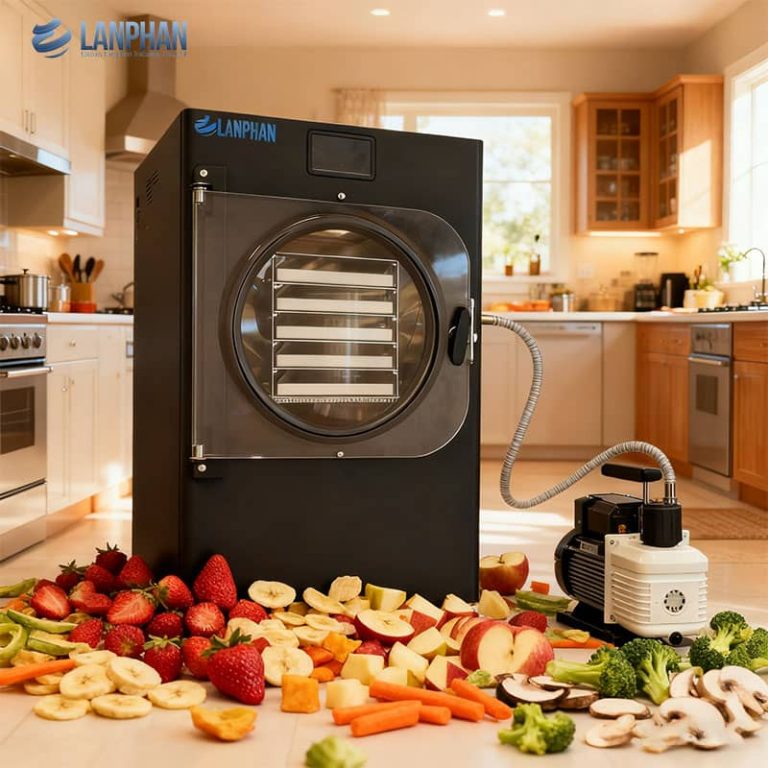
The drain valve and air filling valve were not closed, the vacuum pump was not properly connected, and the freeze dryer door was not closed tightly. All steps must be prepared before officially starting freeze drying.
Inaccurate freeze-drying formulation. Before large-scale freeze-drying, small-batch experiments can be conducted, and freeze-drying formulas from other people or manufacturers can be referenced.
Opening the drying chamber before the freeze-drying process is complete. The freeze-drying process should not skip or accelerate predetermined steps in pursuit of speed. Some changes are invisible to the naked eye. Opening the drying chamber will allow moisture from the air to enter, affecting the drying effect.
IV. After Freeze-Drying
The food was removed immediately after freeze-drying, but the freeze-drying effect was not checked. It should be broken open to check if it is dry and if the inside is crisp.
After the freeze-drying process was completed, the product was not removed for a long time, and water even started to come out of the drain hole. This will cause the food to become damp again. Packaging should be carried out promptly after freeze-drying and once the food temperature has stabilized.
Incorrect packaging. The packaging was not sealed properly or no oxygen absorber/desiccant was placed inside. After freeze-drying, the product should be sealed and stored in a cool, dry, and dark environment.
V. Conclusion
The above are common mistakes in freeze-drying; you can avoid making the same mistakes during the freeze-drying process. At the same time, everyone should also pay attention to the daily maintenance of the machine, including cleaning the freeze dryer and adding oil to the vacuum pump. By paying attention to every step in the freeze-drying process, you can obtain stable, high-quality freeze-dried products.



 English
  Russian
  Arabic
  Spanish