
Laboratory freeze-drying equipment
Laboratory Freeze Dryer Models for Research and Small-Batch Work
Compare Lanphan HFD laboratory models by reference wet load, tray arrangement and cold-trap temperature. Select around the sample, container and intended cycle—not the model name alone.
- Five laboratory-range models compared
- 2–6 kg reference wet load
- −40 / −55°C cold-trap range
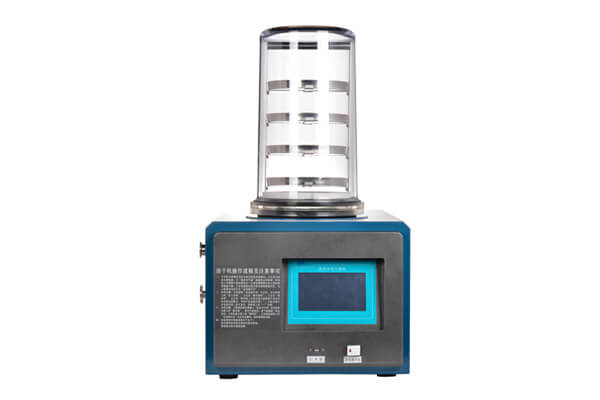
Model comparison
Compare the Laboratory Range
Use the model data below as a practical starting point. The final quotation brings together the selected model, sample, container arrangement and any project-specific options.
| Model | Reference wet load* | Tray arrangement | Cold-trap temperature | Supply | Useful comparison point |
|---|---|---|---|---|---|
| HFD-1 | 2–3 kg | 3 trays | −55°C | 220 V | A compact starting point for small tray loads; check the planned container layout. |
| HFD-3 | 2–3 kg | 4 trays | −55°C | 220 V | Same reference wet-load range as HFD-1 with one additional tray. |
| HFD-4 | 4–6 kg | 4 trays; 0.4 m² tray area | −55°C | 220 V | Higher reference-load range; compare available tray area and fill depth with HFD-5. |
| HFD-5 | 4–6 kg | 5 trays; 0.5 m² tray area | −55°C | 220 V | Same reference wet-load range as HFD-4 with more tray area. |
| HFD-5S | 4–6 kg | 5 trays | −40°C | 220 V | Choose with the sample and condenser requirement in mind. |
How to select
Choose From the Planned Load and Container Layout
A useful comparison starts with the material and how it will be loaded. The same wet mass can occupy very different tray area and produce a different vapor load.
1. Define the sample
State the material, starting moisture, batch objective and any components that may affect the process. A standard aqueous sample is not a useful stand-in for every project.
2. Define the load
Give both wet mass and planned layer depth. A thin layer across several trays is not equivalent to the same mass held in deeper containers.
3. Define the container
Specify trays, vials, flasks or another format, with dimensions and quantity. Container geometry affects usable space and heat and mass transfer.
Samples and loading
Tray Count Does Not Describe the Whole Process
Tray count is useful for a first comparison, but fill depth, drying time and final product condition still depend on the sample and loading plan. Consider the container arrangement alongside freezing behavior and vapor load.
- Bulk material in trays: provide wet mass per tray and the intended layer depth.
- Vials or small containers: provide outside dimensions, quantity, fill volume and closure requirements.
- Flasks or non-standard vessels: provide connection and container details before assuming compatibility.
- Solvent-bearing material: include the solvent details so compatibility can be reviewed with the proposed configuration.
Read the laboratory freeze-drying process guide for the role of freezing, primary drying, secondary drying and loading geometry.
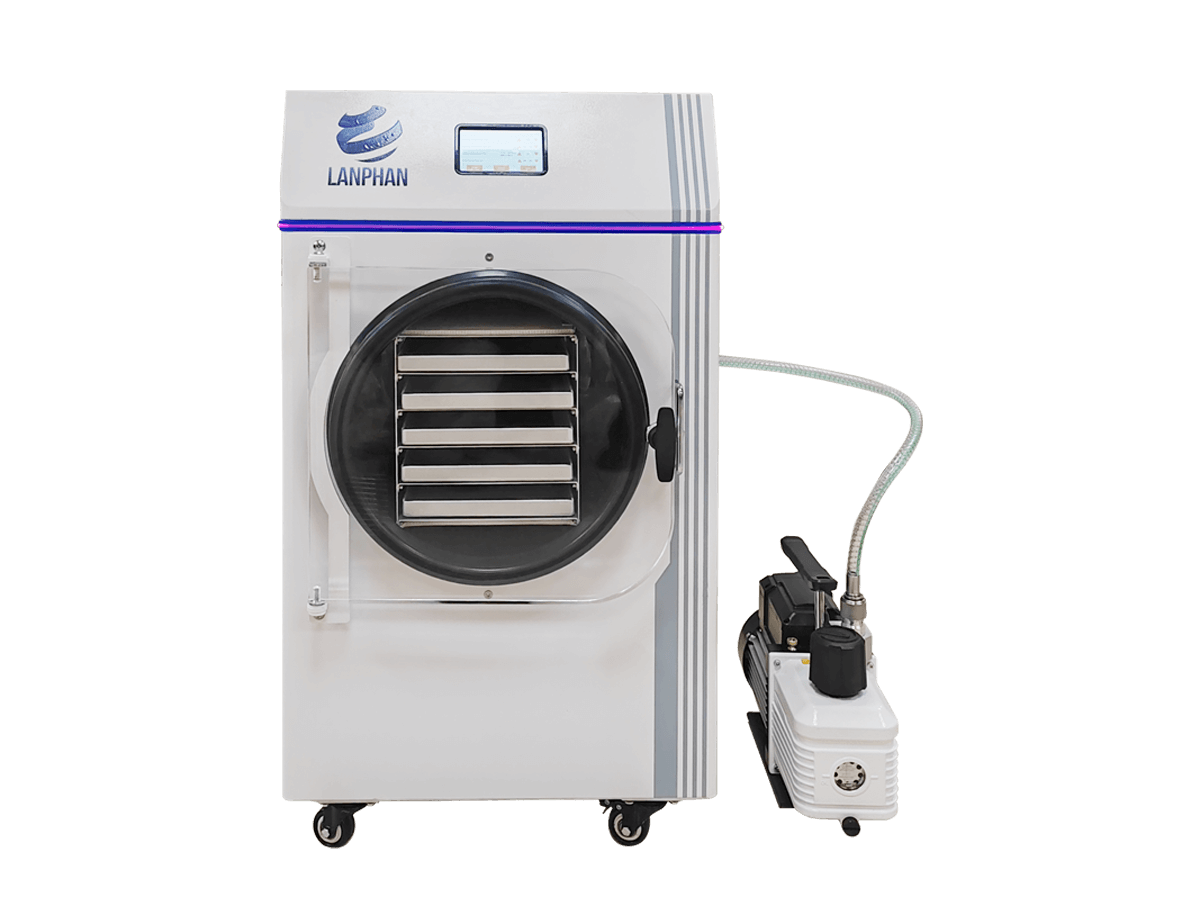
Laboratory or pilot scale
When to Move to a Pilot Freeze Dryer
Consider a Pilot Freeze Dryer when the project moves from exploratory batches to repeatable scale-up, larger scheduled loads or a more closely controlled production-oriented cycle.
Technical confirmation
Configuration Details for Your Project
The comparison covers the available model, reference load, tray arrangement, cold-trap temperature and electrical supply. The quotation then defines the details needed for the planned material and workflow.
Model information shown
- Model name
- Reference wet-load range
- Tray count
- HFD-4 and HFD-5 tray area
- Cold-trap temperature
- Electrical supply
Project-specific details
- Usable tray area and exact tray dimensions where applicable
- Final vacuum and vacuum-pump configuration
- Ice-capture capacity
- Controlled-shelf requirements
- Stoppering or gas-backfill requirements
- Solvent compatibility
Request a model recommendation
Tell Us About the Sample and Planned Load
A few practical details help us recommend a suitable model. Add any of the following that are already available:
- Material name and whether the formulation is aqueous or contains another solvent
- Wet mass per batch and starting moisture, if known
- Container type, dimensions, quantity and fill depth
- Target final condition and expected batches per day or week
- Available electrical supply and installation country
- Any need for controlled shelves, stoppering, backfill or process records
Request a Model Recommendation
Fields marked * are required. Project details are helpful, but not required to start the conversation.
Request a Model Recommendation English
  Russian
  Arabic
  Spanish